Theology Kills

is a podcast about letting our shame

& violence die so that life & love can thrive

You can also find Theology Kills on Spotify, Apple Podcast, and other favorite platforms.

Bad theology kills your soul. Good theology kills what’s crushing your soul.

Hands holding a small plant with soil that's on fire, against a dark background with a glowing halo effect.

what if God doesn’t
ask us to be correct
— just creative?


Toxic theologies have been weaponized to wound, but the gospel was always meant to be medicine. Hosts January Jaxon and Andrew McRae blend René Girard’s mimetic theory with Internal Family Systems to unveil a Christ-centered theology of integrity that heals shame, fosters embodiment, and creates contagious peace in the midst of a world at war. Balancing scriptural insight with personal reflections, Theology Kills is a podcast for healing the bruises left by bad theology and reclaiming the gutsy, grace-filled adventure of coming fully alive in the image of Christ.

Listeners didn’t expect a Christian podcast to…

“not be ignorant.”

“draw from such a wide variety of source material.”

“have swearing, haha!”

what you’ll experience

We help you read Scripture through the lens of wholeness and nonviolence, so you can let go of toxic beliefs without losing the living heart of Christian faith. Each episode explores the ways that shame & violence warp our creativity, our relationships, and our sense of self — and how a more loving, embodied faith can set us free.

  • LISTEN NOW

    What if Christian faith isn’t about being correct, but about being creative? January Jaxon and Andrew McRae explore Maureen Murdock’s Heroine’s Journey through two of history’s most famous women: Eve, the mother of all, and Mary, the mother of Jesus. From the Fall to the Cross, Jaxon and McRae unveil a spiritual adventure that transforms shame, violence, and mimetic rivalry into trust, integrity, and creative power.

    You’ll hear:

    • A fresh theological reading of Eve and Mary

    • Why creativity — not correct behavior — brings love into the world

    • The 10 stages of the Creative Journey

    • Real stories about freezing in moments when love called us to act — and what it takes to become the kind of people who can say yes

    PLUS practices of Sabbath, stillness, and open-focus attention that make space for that shift to begin.

  • Coming June 8, 2026

    What if the Kingdom of Heaven isn’t a goal to achieve but a gift to receive? January and Andrew unpack the Bible’s quietly subversive use of pregnancy as a metaphor for creativity — the vulnerable, sometimes-painful labor of bringing aliveness into the world. Contrasting Sarah’s violence with Hannah’s trust, the hosts follow Saint Paul in imagining a Kingdom born from cooperation instead of control.

    You’ll hear:

    • Why it turns into violence when we try to achieve God’s promises instead of receiving them 

    • Why Genesis 3:16 isn’t about divine punishment, gender hierarchy, or marital submission

    • How Saint Paul’s Christian conversion transformed his understanding of power from militant retribution into motherhood, birth pangs, and nursing

    • The important distinction between healthy receiving and harmful passivity

    PLUS a “mini-manifesto” exercise to help your creativity work toward your values — not against them.

  • Coming June 15, 2026

    What if shame isn’t just a feeling, but an internalized form of violence? January and Andrew explore a reading of Genesis 3 through the eyes of the victim, interpreting humanity’s Fall into sin as an inflicted wound, not a willful disobedience. Drawing a parallel between the anthropology of René Girard and the psychological model mapped by Internal Family Systems (IFS) therapy, they imagine a path beyond violence rooted in trust, integration, and the refusal to war against ourselves.

    You’ll hear:

    • Understanding shame as a violence against ourselves

    • How Girard’s prohibition, sacrifice, and myth echo IFS managers, firefighters, and exiles — both stabilize identity by concealing violence

    • Why “perfect love casts out fear” might mean embrace, not expulsion

    • What the Trinitarian nature of God may show us about a way to be human without violence


    PLUS a “Letters from Unconditional Love” practice to build the habit of speaking with compassion instead of accusation.

  • Coming June 22, 2026

    What if blame isn’t a path to justice, but a catharsis for pain we don’t know how to bear? January and Andrew continue their reading of Genesis, interpreting the story of Cain and Abel as an attempt to solve inner conflict by exporting it. Charting a connection from Eve’s self-betrayal to the brother-betrayal of her children, January and Andrew draw on René Girard and Internal Family Systems to suggest that violence begins long before physical harm is done — in the moment we decide someone is an obstacle to overcome instead of a person to love.

    You’ll hear:

    • How internal shame becomes external blame

    • Why disgust — not just desire — drives the scapegoat mechanism

    • Why eliminating the “problem person” never creates lasting peace 

    • The important distinction between naming harm and needing a villain


    PLUS practices of confession and forgiveness that interrupt self-righteousness and help us recognize ourselves in the person we blame.

  • Coming June 29, 2026

    What if vulnerability isn’t a weakness to overcome, but a creative power to embrace? January and Andrew turn to Mary, the mother of Jesus, as the counterpoint to Eve — a living model of what it means to trust God despite confusion, risk, and pain. From the Annunciation to the wedding at Cana to the grief of the Crucifixion, they explore how Mary’s trust gave birth to divine Love in the world.

    ​​You’ll hear:

    • How Mary’s response to lack at Cana rewrites Eve’s story in the Garden

    • Why faith is actually the prerequisite for curiosity, not its antithesis

    • Why the question of inerrancy is a category error when it comes to Christian scripture

    • What becomes possible when we stay present to pain instead of escaping or controlling it

    PLUS an everyday practice of curiosity and witness that transforms aggravation into trust.

  • Coming July 6, 2026

    What if your body isn’t a liability to control or escape, but a site of divine revelation and relationship? January and Andrew confront the contamination anxiety that distorts Christian theologies of the body, and explore how the Incarnation contradicts that disgust with radical, embodied presence. Culminating in a Eucharistic vision of wholeness, they challenge listeners to imagine what’s possible when we follow Jesus’ example of encountering, instead of expelling, the Other. 

    You’ll hear:

    • Why tying holiness to purity drives shame, exclusion, and violence

    • Why disgust — not just desire — fuels the scapegoat mechanism

    • What Paul actually meant by “flesh” (and why it’s not your body)

    • What happens when Jesus crosses his culture’s boundaries of disease, gender, and social status

    • How Christ’s Holy Spirit redefines holiness as catholicity rather than purity

    PLUS a practice for listening to your body as a trustworthy source of wisdom in everyday discernment.

  • Coming July 13, 2026

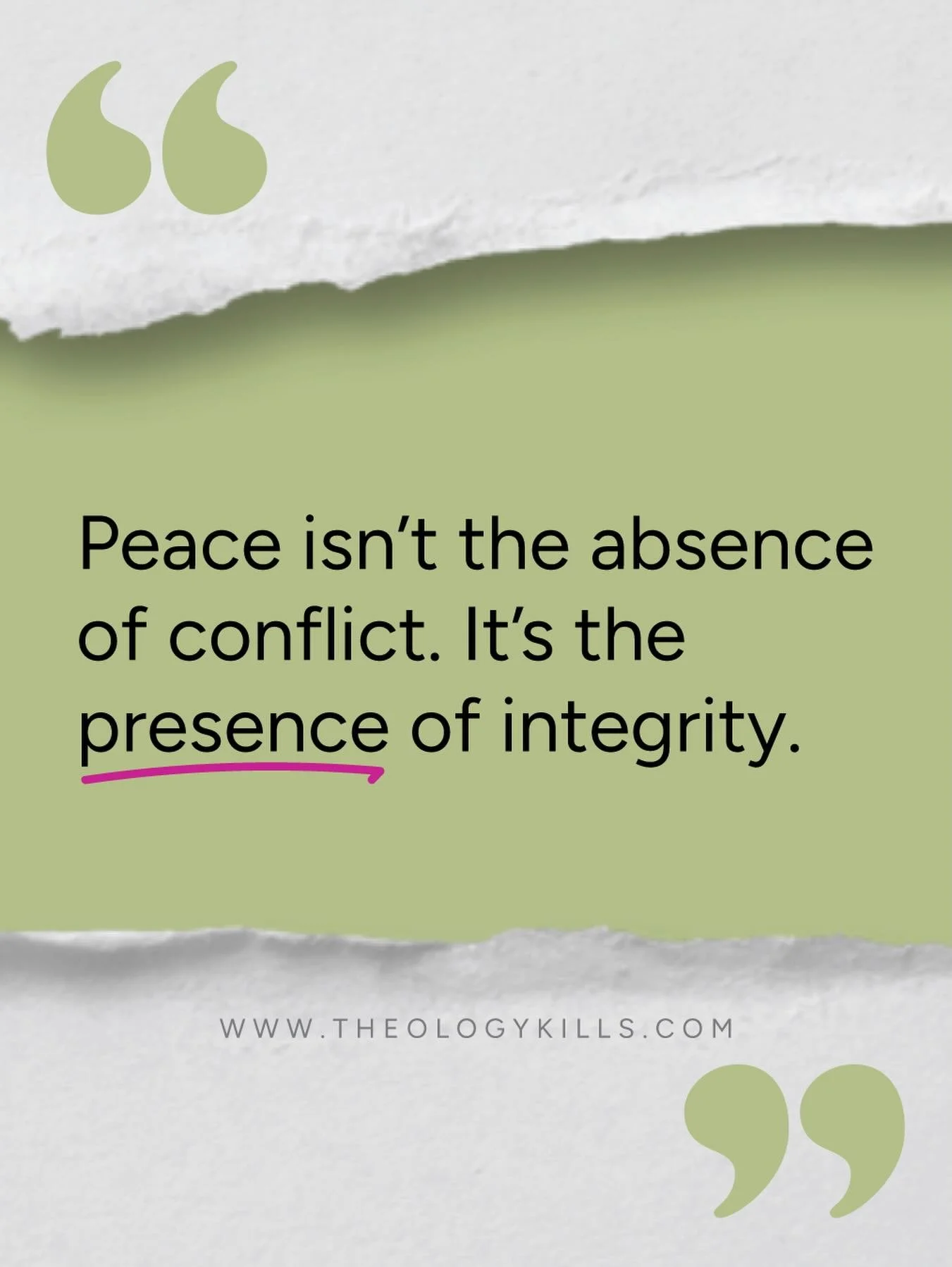
    What if peace isn’t the absence of conflict, but the presence of integrity? January and Andrew explore Jesus’ startling claim that he came not to bring peace, but division — and how his presence exposes the false peace we create through compliance, control, and avoidance. Drawing on psychologist Karen Horney’s conflict coping strategies and master coach Jen Johnsen’s model of conflict-with-integrity, they imagine a nonviolent way of staying in relationship when tensions threaten to tear us apart.

    You’ll hear:

    • Karen Horney’s three conflict strategies (and why they produce false peace)

    • How presence, truth, and kindness bring us back into wholeness

    • How Thomas Merton’s little brother modeled integrity in a moment of conflict

    • The power of Jesus’ prayer to see his enemies through God’s eyes — not his own

    PLUS an exercise for identifying where violent social systems are mirrored in your own inner life, so you can practice peace from the inside out.

  • Coming July 20, 2026

    What if obedience isn’t about mindless rule-following, but about whose voice we trust to help us interpret our reality? January Jaxon and Andrew McRae dive into the linguistic roots of the word “obedience” and draw parallels with René Girard’s concept of méconnaissance, or misrecognition. Moving from the neuroscience of human attention to Simone Weil’s theology of affliction, they look at how “The Father of Lies” warps the human imagination and how the Crucifixion re-orients us to the truth that God withholds nothing from us — not even God’s own life.

    You’ll hear:

    • The roots of obedience as “listening toward” and why that might change how we understand the Fall

    • Why Jesus calls Satan “a murderer from the beginning,” even though we never see the devil raise a blade

    • How Jesus exposes the lie at the heart of accusation without retaliating against his accusers

    • Why disbelieving lies requires more than tearing false stories down — it requires learning what truth feels like in the body


    PLUS January demonstrates The Work of Byron Katie, a practice of embodied inquiry that can help us stop obeying the lies that keep us trapped.

  • Coming July 27, 2026

  • “Honestly, I was skeptical — but this was lots of fun to listen to. Extremely relatable and a great chemistry/dynamic between the cohosts. This changed my idea of what a Christian podcast is.”

    —Matthew Gordon

  • “This podcast helped me realize that it’s okay — it’s more than okay — to bring the ideas that most move us and interest us into conversation with our Christianity. I love the idea that we can play/be creative even in the area of our own theology. And, in fact, this is when we are closest to our true selves and to God. Thank you!”

    —Teresa Stone

  • “Great banter and raw honesty. I didn’t expect a Christian podcast to give me ideas that could help me look inward at things I have avoided.”

    —Candie

  • “This is for anyone tired of facile answers to deep questions about relating to ourselves and relating to God. You’ll appreciate how January and Andrew articulate complex ideas with humor and grace. You're going to want to listen more than once! (I did!)”

    —Rev. Kari Reiten

  • “What I feel most is the infectious enthusiasm and life force that is created between the hosts. It holds a spark that can rekindle faith. Their connection is palpable and the perspectives they’re bringing to the conversation breathe life back into the teachings.”

    —Jessica Peterson

  • “January’s faith is largely orthodox in its content — she doesn’t throw out important traditional concepts. But, she comes to those concepts with tools of contemporary outsider culture. It all feels authentic and integral, not like she’s trying to ‘make tradition cool for the kids’ or something. She truly sees the radical heart of Christianity.”

    —Teresa Stone

meet your hosts

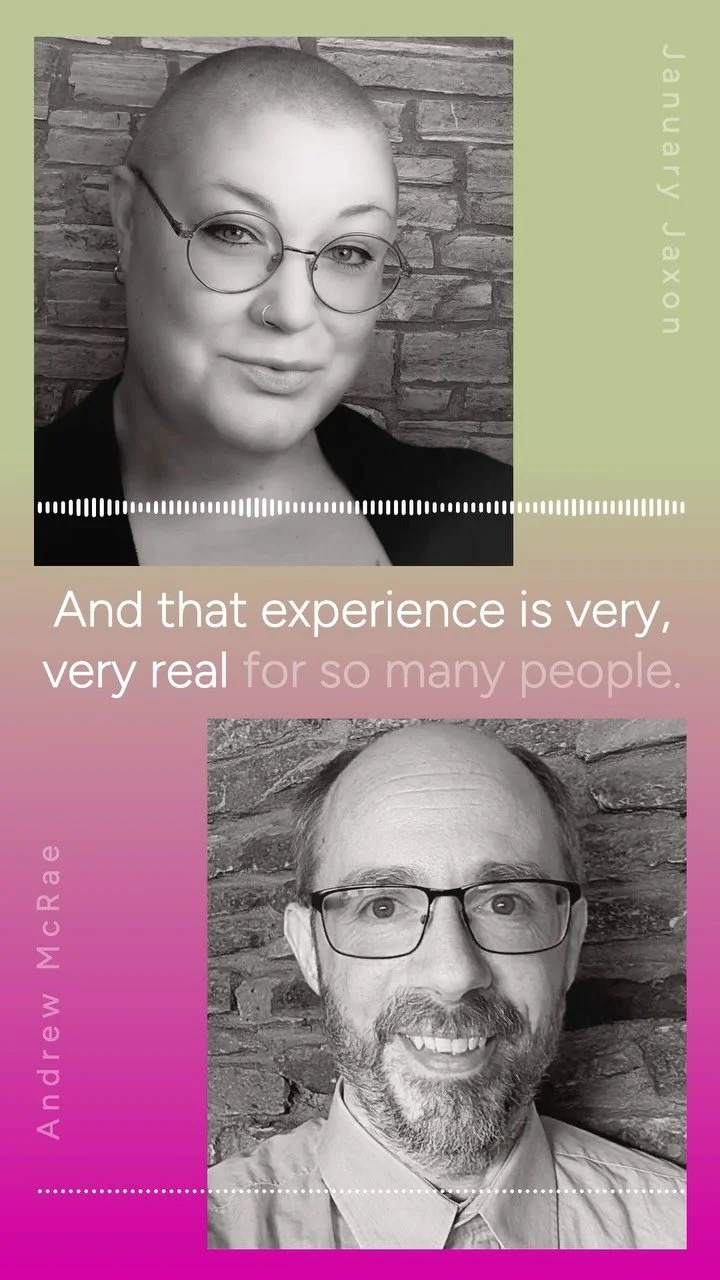
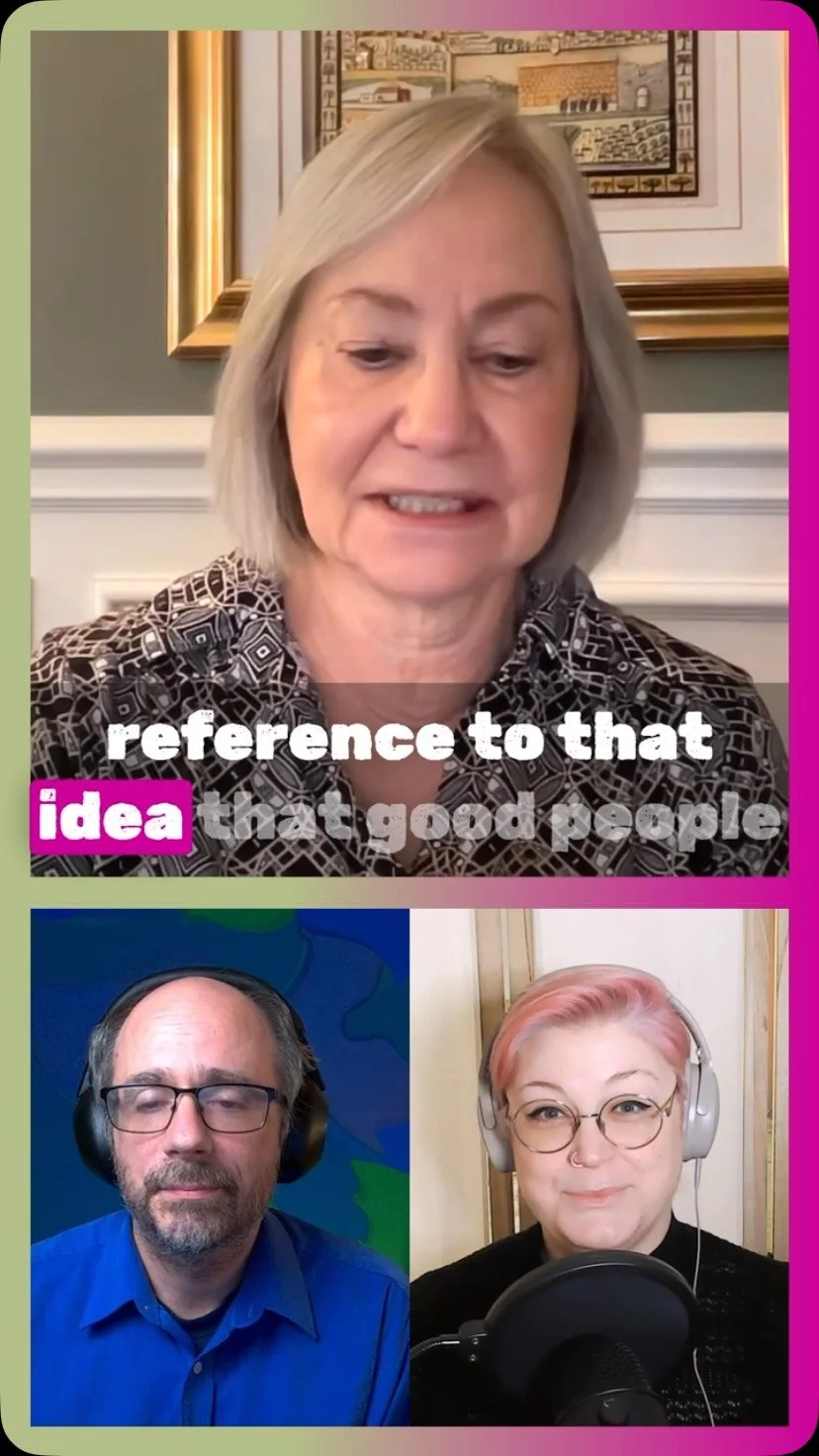
January Jaxon and Andrew McRae are lay theologians with a passion for the magic & mess of living in nonviolent imitation of Christ.

Black and white photograph of a woman with glasses and a nose ring, posed against a stone wall background, mocked up to look like a paper taped to a wall.

January Jaxon

is a Pacific Northwest writer, designer, and coach hosting spaces that blend creative practice with emotionally healthy theology. She helps people find empowerment through creativity & courage instead of through control, so we can quit brutally trying to “fix” each other (or ourselves!) and focus instead on what we each contribute to a future of collective flourishing.

Black and white photograph of a smiling man wearing glasses and shirt, posed against a stone wall background, mocked up to look like a paper taped to a wall.

Andrew McRae

is a roamer who started ESL gigging to feed his habit of wanting to live someplace far away. The days of impulsive one-way transoceanic travel have passed. The roaming, however, continues — mostly through the pages of graphic novels — as he searches out stories that might spark the curiosity of language learners. Currently, his faraway residence is his childhood home in Kentucky.

our mission

To proclaim Christ by recovering a theology that empowers trust, fosters embodiment, and invigorates creativity.

our vision

A Church that relinquishes shame & rivalry and lives in imitation of Christ as a model of integrity, vulnerability, and divine non-violence in a wounded world.

our approach

We help you read Scripture through a lens of wholeness and nonviolence, so you can let go of toxic beliefs without losing the living heart of Christian faith.

The institutions may be dying,

but the gospel is

coming alive.